



K1ngVV
Monetary sovereignty and geopolitics contributor · ryo.news
K1ngVV explores monetary sovereignty, geopolitics, financial chokepoints, network states and private digital money, connecting monetary history with the changing architecture of global power.
Articles by K1ngVV
Search and filter this contributor’s published work by category, topic, place or editorial series.

The Right to Help: The Secret Ballot, the New Membership List, and the Architecture of Freedom
The secret ballot protects political choice—but what protects the people who sustain political movements? From a landmark 1958 Supreme Court ruling to the 2026 Oslo Freedom Forum, K1ngVV examines how financial records can expose associations, discourage civic participation and threaten the freedom…
Read article →
The Network Archipelago: How Digital Communities Build Places That Last
An online community can attract followers. But can it build a place people want to call home? Article 4 of the Building the Network State series examines Kazakhstan’s Network School, 4Seas and Ridgerunner, exploring how digital communities can create productive economies, connect…
Read article →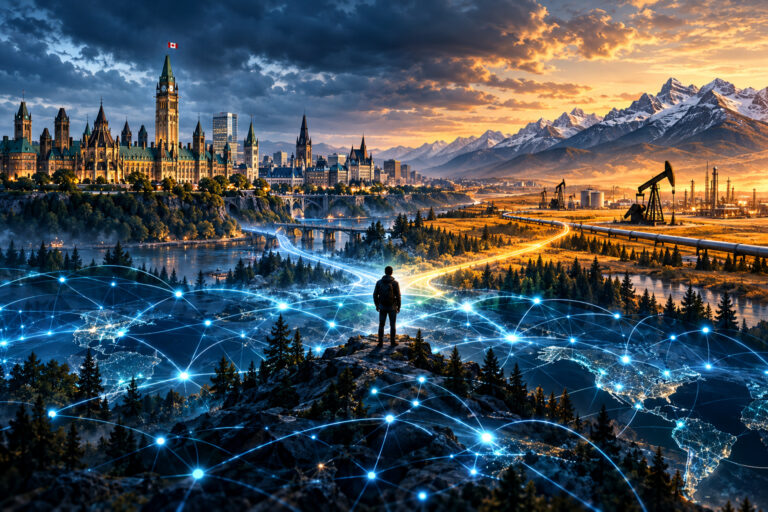
When States Harden, Networks Form: Carney, Alberta, and the New Politics of Exit
Carney seeks to reduce Canada's dependence on Washington as Alberta questions the terms of federation. Balaji warns of a new generation of pragmatic state-builders. Drawing on the Curley Effect, network-state theory and privacy-preserving money, this essay explores whether political exit protects individual…
Read article →
The Anatomy of a Network State: From Club to Constitution
Article 3 of Building the Network State examines the missing institutional layer: how digital communities move from voluntary clubs to constitutional orders with rights, governance, dispute resolution, local autonomy and privacy-preserving verification.
Read article →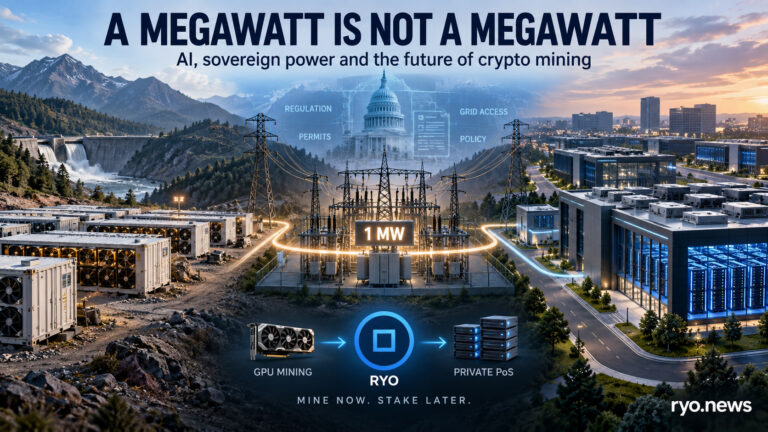
A Megawatt Is Not a Megawatt: AI, Sovereign Power and the Future of Crypto Mining
AI is repricing the infrastructure around electricity. From Michigan and British Columbia to Ethiopia and Pakistan, this analysis examines how AI, sovereign power and grid constraints are reshaping crypto mining—and why Ryo’s planned move from GPU mining to private Proof-of-Stake changes the…
Read article →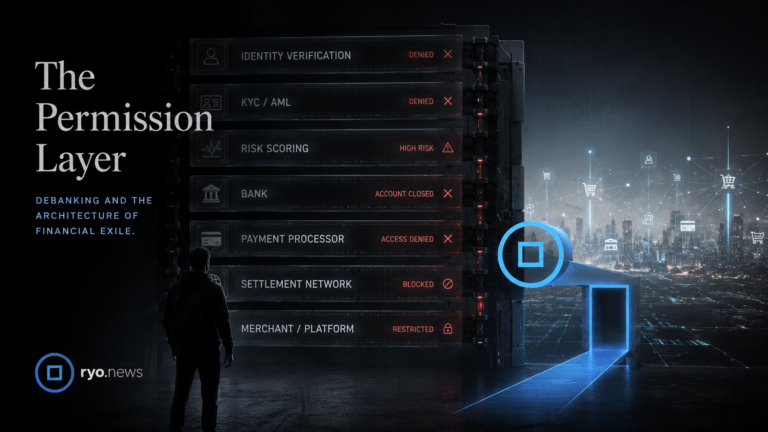
The Permission Layer: Debanking and the Architecture of Financial Exile
When access to money can be revoked, ownership and economic participation are no longer the same thing. From bank closures and sanctions to payment processors and crypto gateways, The Permission Layer examines who can say no, what they can see, and whether…
Read article →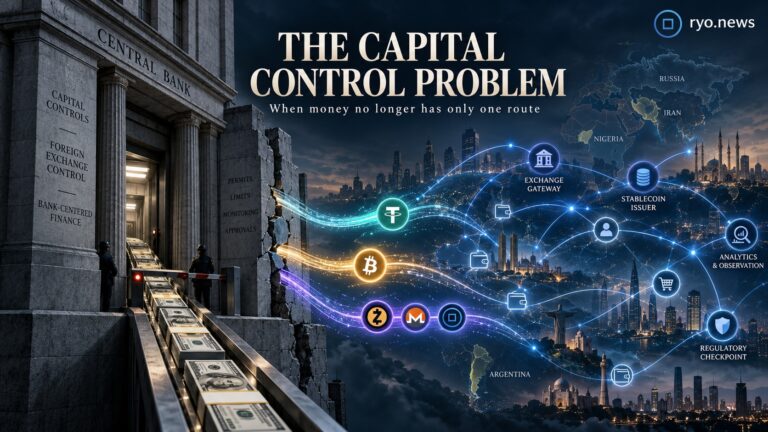
The Capital Control Problem: Stablecoins, Crypto and the End of the Old Monetary Perimeter
Capital controls once worked by concentrating enforcement at banks and foreign-exchange gateways. Stablecoins, Bitcoin and privacy-focused cryptocurrencies multiply the routes money can take, shifting control toward issuers, exchanges, analytics and network edges. From Argentina and Nigeria to Russia and Iran, the monetary…
Read article →
Russia Didn’t Ban Privacy Coins. It Built a Gate Around Them
Russia’s new cryptocurrency law does not explicitly ban privacy coins. Instead, it creates a regulated architecture built around investor access, self-custody, AML controls and mandatory “digital analysis.” We examine the disappearance of the proposed anonymous-crypto exclusion, what the law really means for…
Read article →
Everything Is a Chokepoint: Hormuz, Helium, Gold and the Architecture of Monetary Escape
The Strait of Hormuz exposes a deeper architecture of global power: chokepoints in energy, industry, finance and money. This article traces how scarcity of routes becomes leverage, why gold and digital assets solve different problems, and where privacy coins such as Ryo…
Read article →
The Bitcoin Magnet: How Network Assets Create Economic Gravity
Bitcoin proved that network-native money can attract capital, infrastructure and entire economic ecosystems. Article 2 of Building the Network State examines how economic gravity can evolve into sovereign gravity—and why private capital and governance matter for digital communities seeking independence.
Read article →Gallery Collections by K1ngVV
Curated visual archive collections credited to this contributor.

EXPOSED — RU
Визуальная серия Ryo Currency о том, что происходит, когда финансовая жизнь становится публичной, отслеживаемой и связанной с личностью.
View collection →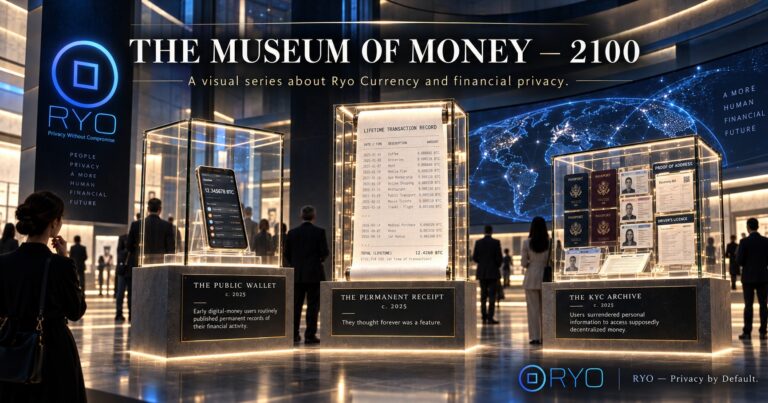
Museum Series
A speculative future-history art series imagining Ryo artifacts preserved in a museum of financial privacy.
View collection →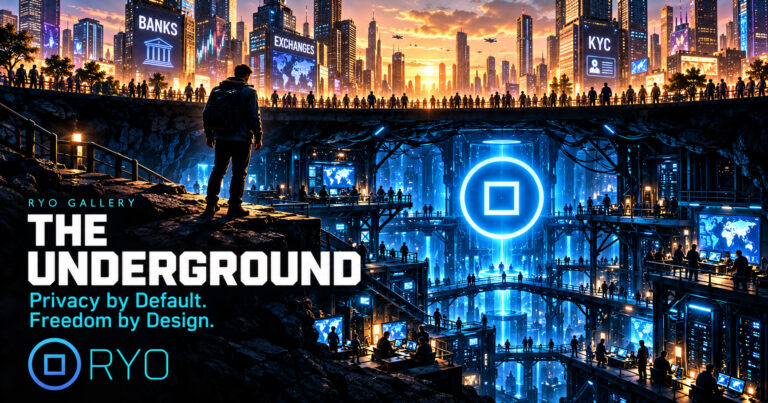
The Underground
A nine-piece visual series contrasting the crowded, surveilled surface of digital finance with a quieter underground built around private money, decentralized infrastructure and financial freedom.
View collection →
Element RYO
Seven scientific-satire artworks exploring Ryo, financial privacy and the properties of money through vintage laboratories and modern digital engineering.
View collection →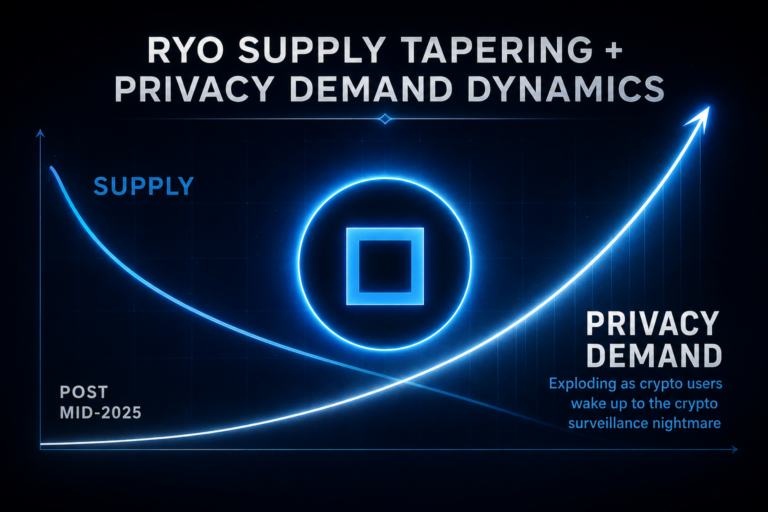
Mining, Emissions & Algorithms
GPU mining, CryptoNight-GPU, emission design and network participation.
View collection →
Monetary History & Satire
Visual critiques of fiat systems, inflation, surveillance and political power.
View collection →