



Dr. Max Anon
Privacy technology and cryptography contributor · ryo.news
Dr. Max Anon examines privacy technology, cryptography, wallet and network security, mining and decentralized systems through evidence, architecture and real-world threat models.
Dr. Max Anon is a technical contributor to ryo.news focused on privacy technology, cryptography, network security and decentralized systems. His work examines how privacy systems behave beyond protocol specifications, including the interaction between transaction privacy, wallet behavior, network metadata, infrastructure and real-world threat models.
His analysis covers privacy-preserving cryptocurrencies, zero-knowledge proofs, blockchain analytics, mining architecture, wallet security, network anonymity and emerging approaches to decentralized financial infrastructure.
The emphasis is on separating what a system claims from what it actually reveals. Articles distinguish deployed technology from research and roadmap proposals, examine tradeoffs between competing architectures, and treat privacy as a system-level property rather than a feature of one cryptographic primitive.
Articles by Dr. Max Anon
Search and filter this contributor’s published work by category, topic, place or editorial series.
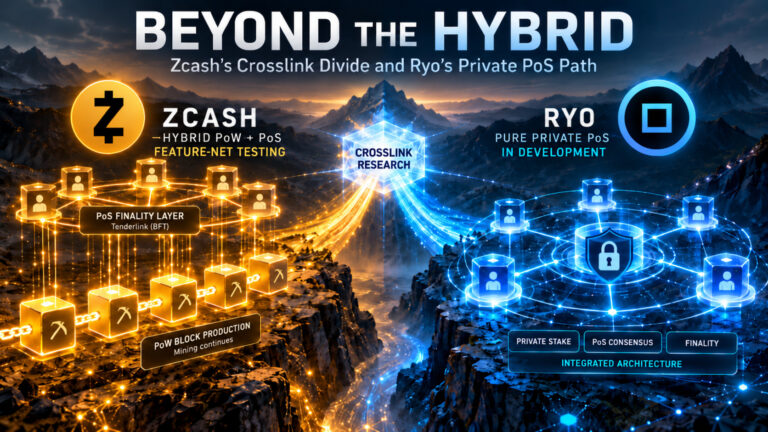
Beyond the Hybrid: Zcash’s Crosslink Divide and Ryo Currency’s Private PoS Path
Zcash’s Crosslink proposal has divided developers over finality, security and consensus complexity. This analysis examines the strongest arguments on both sides, traces the history of hybrid and pure PoS research, and explains why Ryo intends to adapt Crosslink for a different destination:…
Read article →
When Money Goes Dark: The Hidden Infrastructure Behind Digital Finance
A Google Cloud outage disrupted banking access. A cyberattack exposed trading infrastructure in Japan. As AI agents gain financial authority, October 2026 reveals a deeper vulnerability: owning digital money and being able to use it are not the same thing.
Read article →
When the Exit Node Turns Hostile: Inside the Hijacking of 333 Tor Relays
In October 2026, researchers found 333 Tor exit relays redirecting SSH connections. Dr. Max Anon examines a documented Ebury infection at one operator, the Tor Project's containment response, and why anonymous routing cannot replace SSH server authentication.
Read article →
The Chain Was Saved. What Happened to the Payments?
The Pirate Chain rollback following the creation of 39.82 million unauthorized ARRR restored the intended supply, but raised harder questions about legitimate payments. Dr. Max Anon traces the GitHub code history, missed security warnings, Zano's recovery and lessons for Ryo's Halo 2…
Read article →
When the Math Breaks: AI, Crypto’s Bunker Mode, and Ryo’s Safe-Haven Test
As AI accelerates cryptographic research, private money faces a defining test: can it protect ownership when the mathematics breaks? Ryo’s privacy roadmap and Zcash’s recovery lessons reveal what it takes to preserve confidentiality, prevent counterfeiting and keep funds recoverable through a cryptographic…
Read article →
The Stablecoin Currency War: Who Buys America’s Debt in the Digital Dollar Age?
Stablecoins may be quietly extending American monetary power—turning global demand for digital dollars into Treasury demand while shifting new authority to private issuers. Bolivia and privacy coins reveal the sovereignty tradeoff.
Read article →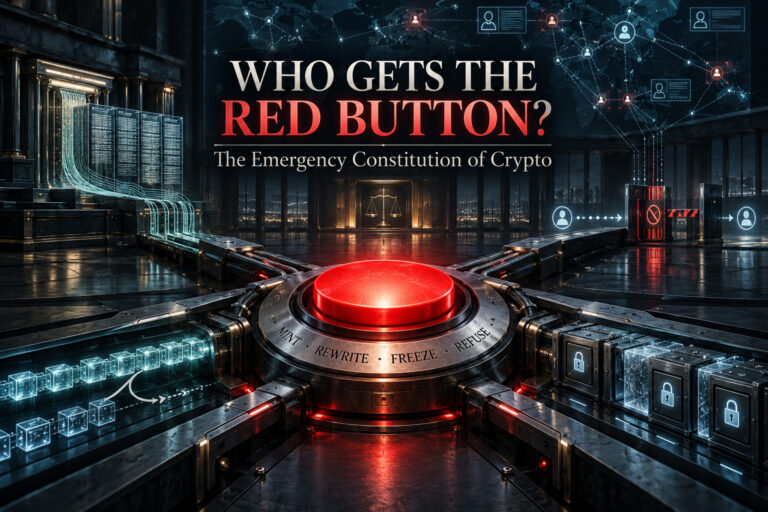
Who Gets the Red Button? The Emergency Constitution of Crypto
Zano rewound roughly a month of chain history. DERO patched forward, Bitget froze withdrawals, and THORChain resisted address-level blacklisting. Together, these crises reveal crypto’s hidden emergency constitution—and who holds veto power over money.
Read article →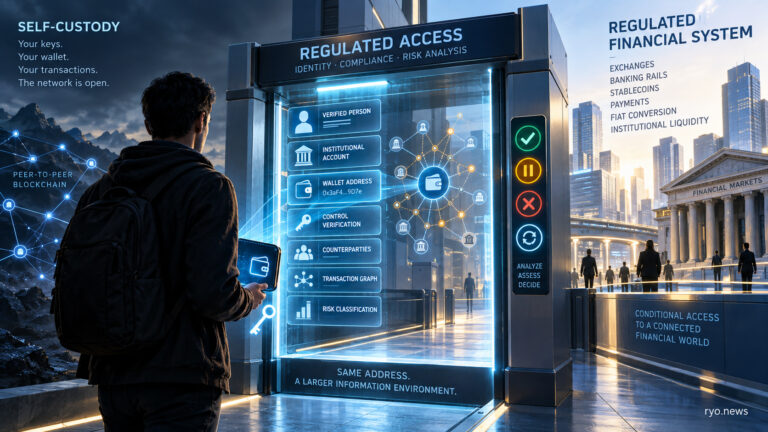
From Account KYC to Wallet KYC: When Identity Becomes Financial Infrastructure
Wallet KYC is moving identity checks beyond the exchange account and towards the wallet itself. As regulators and platforms connect verified people to self-hosted addresses, counterparties, transaction histories and risk scores, the boundary between compliance, self-custody and financial surveillance is becoming part…
Read article →
From Database to Doorstep: 153 Million Driver’s Licenses, Crypto Data Leaks and the KYC Paradox
Driver’s-license leaks, crypto exchange breaches and compromised tax records can expose more than identity—they can connect a person’s home address to crypto ownership and perceived wealth. Dr. Max Anon examines the KYC paradox, France’s kidnapping wave, and why Ryo’s private-by-default ledger matters…
Read article →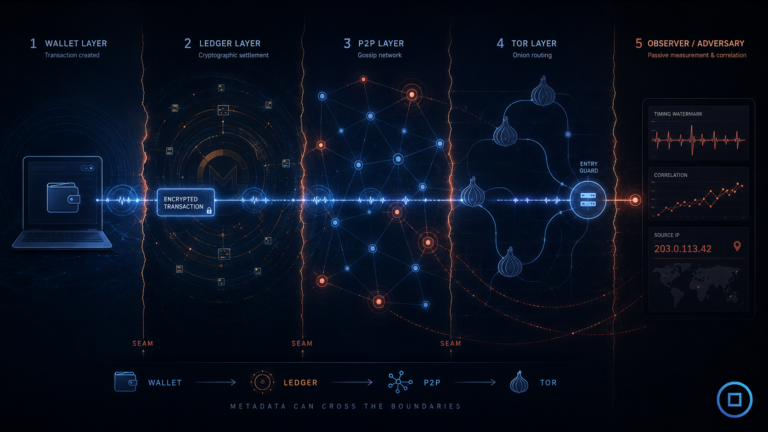
ProxyMark and Monero over Tor: How Privacy Can Fail Between Layers
ProxyMark presents a conditional method for associating certain Monero-over-Tor transactions with their originating IP addresses. The research shows why ledger privacy, wallet privacy, peer-to-peer propagation and network anonymity must be evaluated together—and why uncertain evidence can become more powerful when combined across…
Read article →