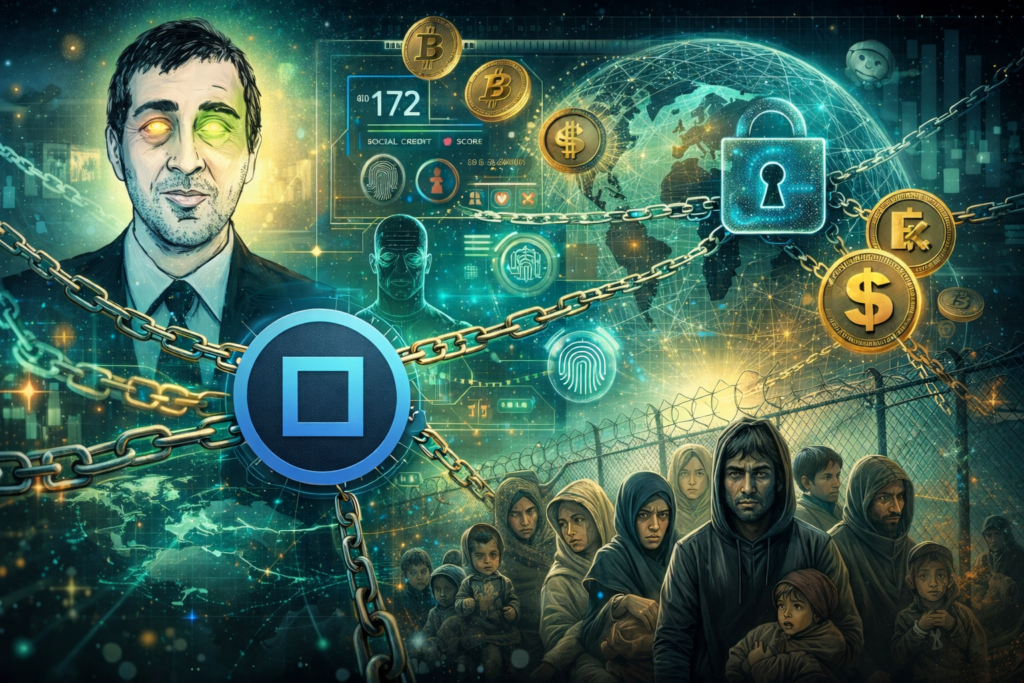

The End of Free-Floating Fiat: How the Strait of Hormuz Is Dismantling the Global Monetary Order

I. Introduction: The Funeral They Didn’t Announce

On August 15, 1971, President Richard Nixon announced that the United States would no longer convert dollars to gold at a fixed value. The Bretton Woods system collapsed, and in its place emerged a new order: free-floating fiat currencies, their value determined not by any commodity but by the full faith and credit of the issuing governments [1].

For fifty-five years, this system has governed global money. Every major currency—the dollar, the euro, the yen, the yuan—has been a floating fiat currency, backed by nothing but debt and political will. The system survived oil shocks, financial crises, and pandemics. But it was always fragile, built on the assumption that debt could compound forever and that nations would never weaponize the monetary system against each other [2].

That assumption is now dead.

The Strait of Hormuz crisis is not about oil. It is not even about the dollar. It is about the entire free-floating fiat system reaching its terminal phase. What emerges from this crisis will not be a single new reserve currency—not Bitcoin, not gold, not the yuan alone. It will be something the world has not seen since the collapse of empires: competing digital monetary blocs, each with its own programmable currency, each designed to monitor, restrict, and control economic activity within its sphere [3].

In this fragmented world, the ability to move value between blocs—to access the free markets that remain, to preserve privacy in an age of algorithmic surveillance—will depend on a new kind of asset: neutral, private money that exists outside any bloc’s control. This article explains why the old system is ending and what will replace it.

“The petrodollar system is not dying of old age—it is being strangled at the chokepoint.”

II. The 1971 System: Fifty-Five Years of Floating Fiat

To understand what is ending, we must first understand what was built.

The Bretton Woods system, established in 1944, pegged major currencies to the dollar, and the dollar to gold at $35 per ounce. It was a disciplined system, but discipline proved unsustainable. By 1971, the U.S. had printed too many dollars to fund Vietnam and the Great Society programs. Foreign governments, led by France, began demanding gold. Nixon closed the gold window, and the world entered uncharted territory [2].

The free-floating fiat era had three defining characteristics:

  1. No Commodity Backing: Currencies were backed by nothing but government debt. Their value derived from the requirement to pay taxes and the willingness of markets to hold them.
  2. Debt Supercycle: Without gold discipline, governments could borrow indefinitely. Global debt exploded from 100% of GDP in 1971 to over 235% today [4].
  3. Dollar Hegemony: The dollar remained the world’s reserve currency, propped up by the 1974 petrodollar agreement: Saudi Arabia would price oil exclusively in dollars and recycle petrodollars into U.S. debt, in exchange for military protection.

This system worked for decades because everyone had an incentive to maintain it. The U.S. got infinite demand for its debt. Oil importers got a stable pricing mechanism. Saudi Arabia got protection. But as with all systems built on informal arrangements, it was vulnerable to the one thing that could break it: a rival willing to offer a better deal.

III. The Weaponization of Finance: How Trust Died

The first crack appeared not in the Gulf, but in Europe. On February 28, 2022, following Russia’s invasion of Ukraine, the United States and its allies froze approximately $300 billion in Russian central bank assets held abroad [6]. It was an unprecedented act: the reserve assets of a G20 nation, seized by fiat.

The message to every central bank was unmistakable: if you hold dollars, you hold them at the pleasure of the United States.

Russia responded by accelerating its shift to yuan and gold. China accelerated its Cross-Border Interbank Payment System (CIPS). India and the UAE began settling oil trades in rupees and dirhams. The BRICS nations discussed alternatives. By 2025, CIPS processed 175 trillion yuan (approximately $24.5 trillion)—a 43% increase year-on-year [3].

The weaponization of finance did not end with Russia. In Canada, truckers protesting vaccine mandates had their bank accounts frozen without judicial process. In Europe, politicians proposed linking access to the euro with compliance with EU policies [8]. The message was global: no currency held outside its issuing jurisdiction is safe if geopolitical winds shift.

Trust in the neutrality of money—the belief that a dollar is a dollar regardless of who holds it—evaporated. And with it, the foundation of the free-floating fiat system crumbled.

IV. The Debt Supercycle: A Global Consensus Emerges

Even without geopolitical shocks, the free-floating fiat system faced an internal contradiction: debt cannot compound forever. U.S. national debt has reached approximately $38.9 trillion [9]. Global debt sits at 235% of world GDP [4]. But these numbers, while staggering, only tell part of the story. Across schools of thought and geographic regions, a convergence is emerging: the debt supercycle is ending, and with it, the era of unquestioning faith in fiat.

Ray Dalio, founder of Bridgewater Associates, has spent decades studying historical cycles. His conclusion, reiterated at Davos in January 2026, is that the monetary order is “breaking down.” Central banks, he observes, are quietly losing faith in fiat currencies. The evidence? Gold outperformed tech stocks by over 70% in 2025. Dalio now recommends 5-15% of portfolios in gold, not as speculation but as a hedge against the very scenario he describes. “When countries start viewing each other with suspicion,” he notes, “they don’t want to hold each other’s debt. They want hard assets. Gold. Land. Things that can’t be printed into oblivion or sanctioned away.” [10]

Across the Atlantic, Spanish economist Daniel Lacalle offers a complementary diagnosis. What we are witnessing, he argues, is not merely “de-dollarization” but something deeper: a “loss of confidence in developed economies’ fiat currencies and sovereign debt as a reserve asset.” Lacalle points to three limits governments face: the economic limit, where more debt leads to stagnation; the fiscal limit, where interest expenses soar; and the inflationary limit, where purchasing power erodes. Central banks, he notes, stopped trusting developed nations’ debt as their core asset in 2021, when inflation and fiscal irresponsibility started generating losses at major central banks. The freezing of Russian reserves only confirmed what many already suspected. “The famous ‘gold is money, everything else is debt’ sentence,” Lacalle writes, “becomes more relevant than ever.” [11]

From China, academic and policy voices echo the theme. Wang Jian, an analyst at the International Monetary Institute of Renmin University, has documented how multilateral platforms like mBridge are reshaping expectations. The message from Beijing is pragmatic: alternatives are being built not to replace the dollar overnight, but to ensure that when the current system fractures, infrastructure exists to route around the damage [12].

In India, policymakers have quietly accelerated work on the digital rupee while watching the BRICS “Unit” project with interest. The Institute of Economic Strategy of the Russian Academy of Sciences launched a pilot of the Unit in October 2025—a digital instrument backed 40% by physical gold and 60% by an equal-weighted basket of BRICS currencies. While still a pilot, it signals where thinking is headed: toward assets that combine gold’s neutrality with digital portability [13].

These are not fringe voices. They are analysts, academics, and policymakers from different traditions—American hedge fund managers, Spanish economists, Chinese academics, Russian strategists—converging on the same diagnosis: the debt supercycle is ending, and the free-floating fiat system with it.

V. The Strait of Hormuz: Catalyst, Not Cause

Into this fragile landscape came the missiles.

On March 14, 2026, Iran effectively closed the Strait of Hormuz. Twenty percent of the world’s oil supply stopped moving. President Trump announced that the US and “many countries” are sending warships to keep the Strait “open and safe.” Iran claims it downed 114 US-Israeli drones, targeted Patriot radars, and declared the “era of international bullying” over [14].

But the military story is not the economic story. The economic story is this: citing a senior Iranian official, CNN confirmed Friday that Tehran is considering allowing a limited number of oil tankers through the Strait provided the cargo is traded in Chinese yuan [14].

As Jim Rickards noted on X, the Strait of Hormuz will not be reopened soon, and regime change in Iran is not coming. He warns of a severe global recession ahead [15]. This is not a temporary closure but a permanent structural shift—the physical manifestation of a world dividing into blocs.

Compounding the crisis, Yemen’s Houthi movement has now declared that “all options are on the table,” including blocking the Bab al-Mandab Strait, the southern gateway to the Red Sea through which approximately 10% of global maritime trade passes [16].

China imports 45% of its crude through the Hormuz region. It holds 90 to 130 days of strategic reserves—and has been stockpiling aggressively, with 15.8% more oil imports in early 2026, bringing strategic reserves to 1.2 billion barrels [17]. The West cannot match this cushion. The fragmentation the dollar was designed to prevent is being accelerated by the war that was supposed to preserve it.

VI. How Digital Monetary Blocs Will Function

To understand where we are heading, we must understand the infrastructure now being built. Digital monetary blocs fall into two categories: single-nation blocs, where a sovereign state extends its CBDC to trading partners, and multinational blocs, where multiple nations pool reserves or create shared settlement layers.

Single-Nation Blocs: The Yuan, Rupee, and Ruble

China’s e-CNY is the most advanced. By late 2025, it had handled over 3.4 billion transactions worth roughly $2.3 trillion. Critically, 80-90% of Iranian crude exports to China now settle in yuan, bypassing SWIFT entirely. The digital yuan is not just a domestic payment tool—it is a geoeconomic instrument, extended to Belt and Road partners and energy suppliers who need an alternative to the dollar [3].

India’s digital rupee pilot has surpassed 6 million users, with programmable features for targeted transfers [18]. Russia’s digital ruble is designed for trade within the Eurasian Economic Union. Each of these is a single-nation bloc: the currency is issued by one state, but its use extends to partners who accept it as a settlement medium.

Multinational Blocs: The BRICS Unit and mBridge

The BRICS “Unit,” launched as a pilot by the Russian Academy of Sciences in October 2025, represents a different model. It is backed 40% by physical gold (by weight, not price) and 60% by an equal-weighted basket of BRICS currencies—the real, yuan, rupee, ruble, and rand [13]. This structure is designed to be neutral: no single nation dominates the basket, and the gold backing provides a stability anchor that fiat alone cannot offer [20].

The Unit is not intended for everyday use. It is a settlement instrument for cross-border trade among institutions, allowing BRICS nations to denominate contracts in a unit that no single member controls. As Vince Lanci, a veteran precious metals analyst, describes it: “a basket-backed, collateral-anchored settlement instrument intended specifically for wholesale, cross-border trade in a multipolar financial world” [20].

Parallel to the Unit, the mBridge project—a collaboration between the BIS Innovation Hub, the People’s Bank of China, the Bank of Thailand, the Central Bank of the UAE, and the Hong Kong Monetary Authority—has reached its Minimum Viable Product stage. In trials, 20 commercial banks across four jurisdictions conducted over 160 real-value transactions totaling more than $22 million. The platform uses distributed ledger technology to enable real-time, cross-border CBDC settlements [12].

What makes mBridge significant is its architecture: it allows participating central banks to maintain control over their own currencies while enabling seamless exchange between them. As former PBOC Governor Zhou Xiaochuan has clarified, mBridge’s goal is not to challenge the dollar but to create complementary infrastructure that fills efficiency gaps [21].

The Digital Dollar

The United States is pursuing what some analysts call the “Amero” concept—a digital dollar zone extending to Canada, Mexico, and key allies. This infrastructure combines a CBDC-enabled dollar with regulated stablecoins like USDT and USDC, all subject to U.S. jurisdiction. President Trump has declared himself the “Crypto President,” and the GENIUS Act creates a federal framework for compliant stablecoins [22].

The Neutral Bridge Problem

These blocs share a common feature: they are designed for control. Programmable money enables automated sanctions, geofenced spending, and algorithmic surveillance. But this creates a problem: how does value move between them?

Using a rival bloc’s CBDC for settlement cedes economic intelligence. Using regulated stablecoins risks freeze orders. Using transparent cryptocurrencies like Bitcoin enables blockchain analytics firms to trace flows [24].

This is where the concept of a neutral bridge asset becomes essential. As a 2021 Ripple report noted, “Neutral bridge assets will allow for frictionless value movement between various CBDCs without requiring each one to solve the liquidity challenges inherent in cross-border transactions” [25]. The requirements for such an asset are clear: privacy by default, decentralization, fair distribution, and security.

Ryo Currency was architected to meet these requirements. Its next-generation privacy stack—Halo 2 zero-knowledge proofs and a high-latency mixnet—ensures that transactions cannot be tracked. Its ASIC-resistant mining ensures decentralization. Its botnet-resistant mining prevents supply concentration in the hands of criminals. Its egalitarian emission schedule ensures fair distribution. We will explore this architecture in depth in the fifth article of this series, The Architecture of Freedom.

VII. Conclusion: The Old World Is Gone

The free-floating fiat system established in 1971 is over. It died not in a single dramatic moment, but through decades of debt accumulation, currency debasement, and the slow poisoning of trust. The weaponization of finance accelerated its demise. The Strait of Hormuz crisis, the Houthi threat at Bab al-Mandab, China’s stockpiling—these are not isolated events. They are the birth pangs of a new world.

What comes next will not be simpler. It will be more complex, more fragmented, and more controlled. Digital monetary blocs will offer stability within their borders, but at the cost of freedom between them. The infrastructure of the new era is the infrastructure of exclusion—programmable money, algorithmic surveillance, and capital controls embedded in code.

In this new world, the ability to move value between blocs—to access the free markets that remain, to preserve privacy in an age of algorithmic surveillance—will depend on having the right tools. Neutral, private money is not a luxury. It is becoming a necessity.

The era of free-floating fiat is over. The era of blocs has begun. The only question is whether you will have the tools to move between them.

VIII. Call to Action

  • Understand the forces reshaping global money. Read the analyses of Dalio, Lacalle, and Glazyev. Follow the developments in CBDCs, the BRICS Unit, and mBridge.
  • Prepare for a world where access to the financial system cannot be taken for granted. Consider what you would do if your own wallet were frozen, your own transactions blocked.
  • Explore neutral, private assets that exist outside any bloc’s control. Learn about Ryo Currency and the architecture of financial sovereignty.

The era of free-floating fiat is over. The era of blocs has begun. The only question is whether you will have the tools to move between them.

References & Further Reading


I. Introduction: The Other Strait

On March 14, 2026, as missiles flew over the Gulf and tankers waited at the line in the Strait of Hormuz, Balaji Srinivasan posted a message on X that cut through the geopolitical drama to focus on the human dimension of the crisis [1]:

“We should build more crypto tools for refugees and stateless people. Because there may unfortunately be many more refugees and stateless people…and from all social classes. Ukrainians leaving the war. Californians leaving the state. Gulf workers leaving the missiles.”

Srinivasan, the entrepreneur, investor, and former CTO of Coinbase, understands something that most macro analysts miss: while warships gather at physical straits, millions are approaching a digital strait—a chokepoint in the global financial system that will determine who can participate in the economy and who will be left behind [2].

This article argues that the rise of digital monetary blocs—CBDC-controlled economic zones—will create a new class of financial refugees: people excluded from economic participation not by geography, but by algorithm, identity score, political dissent, or even health choices. For these populations, privacy-preserving cryptocurrencies like Ryo Currency are not investment vehicles or speculative assets. They are survival tools—the only means of maintaining economic agency in a world of programmable exclusion.

“Crypto is wartime mode, but for the Internet. Public blockchains were created to resist datacenter attacks, hacks, and network blocks.” — Balaji Srinivasan

II. Who Are the New Financial Refugees?

The category of “refugee” has traditionally been defined by physical displacement. But in the coming era of digital monetary blocs, exclusion will take many forms. Based on current trajectories, we can identify at least five distinct categories of people at risk of financial exile:

The Dissident

A journalist in Beijing, Shanghai, or Hong Kong whose social credit score has been downgraded for “unreliable” reporting. Their access to the e-CNY wallet is restricted. They cannot book travel, pay for housing, or receive payments from overseas publishers. The digital yuan bloc has closed to them. As central banks develop programmable currencies, the technical infrastructure for such exclusion becomes increasingly sophisticated [3].

The Low-Score Citizen

An individual in any future CBDC system—whether in the dollar bloc, euro bloc, or yuan bloc—whose algorithmic score falls below a threshold. Perhaps they defaulted on a loan, associated with a blacklisted address, or simply triggered a machine learning model’s suspicion. Their ability to transact within the official economy is progressively limited. As the Justice Centre for Constitutional Freedoms noted in its analysis of Canadian CBDC surveys, citizens fear that “financial crimes being used to justify limiting privacy or anonymity” could have cascading effects on “other rights and freedoms, such as the freedom for people to make individual economic decisions for themselves” [4].

The Health Policy Non-Compliant

This category deserves particular attention, as it represents a precedent that many citizens have already experienced. During the COVID-19 pandemic, individuals who refused experimental vaccines faced exclusion from employment, education, restaurants, and travel in numerous jurisdictions worldwide [5]. In a 2024 floor speech supporting the CBDC Anti-Surveillance State Act, U.S. Representative Marjorie Taylor Greene explicitly connected these events to the dangers of programmable money:

“Never forget that, in the past few years, we just lived through a time… where the government forced social media to censor Americans for their statements about the 2020 election, unconstitutional COVID lockdowns, and violations of Americans’ medical freedoms, forcing them to take an experimental vaccine in order to work, go to school, shop, go to restaurants, and live.” [5]

In a CBDC-enabled world, such exclusion need not rely on employers or private businesses enforcing mandates. The currency itself can be programmed to expire if health compliance certifications are not maintained, or to block transactions at businesses deemed “non-compliant” with public health directives. The infrastructure for health-based financial exclusion is not hypothetical—it is the logical extension of the programmable money architectures already being piloted in India and China [6].

The Physical Refugee

A family fleeing Gaza, or a worker escaping the missile strikes on Kharg Island, crossing a border with nothing but the clothes they wear. They have no access to their home country’s banking system, and no standing in the destination country’s digital identity framework. They are economically invisible—and therefore, economically helpless. According to the European Bank for Reconstruction and Development, more than 75 percent of adults in countries experiencing humanitarian crises live outside the formal financial system, leaving them unable to rebuild their lives or businesses due to lack of recognized assets or documentation [7]. The number of forcibly displaced individuals reached 117.2 million globally in 2023, and climate-related disasters have displaced over 376 million people since 2008 [7].

The Stateless Person

Millions around the world who lack formal identification documents. In a world where money is programmable and requires digital identity to access, they become non-persons in the financial system. The Minderoo Centre for Technology and Democracy warns that blockchain-based identification schemes, while promising agency, often become “tracking and surveillance tools rather than reducing the collection of personal data,” and do not mitigate “the political structures that hamper certain communities’ access to financial, health, and social services and mobility” [8].

Srinivasan’s insight is that these populations are not marginal edge cases—they are a growing class that includes “all social classes.” The Gulf workers leaving the missiles today are not just laborers; they are engineers, doctors, and businesspeople whose entire financial lives were denominated in the currency of a bloc now at war. They need to escape not just physically, but financially.

III. The Architecture of Exclusion: How Digital Blocs Create Refugees

To understand how financial refugees are created, we must examine the mechanisms that digital monetary blocs will deploy. These are not speculative future technologies—they are being built and piloted today.

Programmable Money

CBDCs differ from physical cash in a fundamental way: they are software. As such, they can be programmed with restrictions that cash cannot enforce. India’s CBDC pilot already experiments with programmable conditions on transfers [6]. The “Stalin note” concept—money that expires if not spent within a certain timeframe—becomes technically feasible. Money can be geofenced, preventing it from being spent outside approved jurisdictions. It can be time-locked, expiring after a certain date. It can be restricted to specific categories of merchants, blocking purchases deemed “non-essential” or “non-compliant.”

Algorithmic Surveillance

Every transaction in a CBDC system is visible to the issuing authority. AI-driven monitoring systems analyze this data in real-time, flagging “suspicious” behavior patterns. Machine learning models can identify wallets that interact with blacklisted addresses, that receive funds from outside the approved bloc, or that engage in transaction patterns deemed atypical. As one analysis notes, “the same technology that enables central banks to monitor for money laundering enables them to monitor for political dissent” [3].

Capital Controls as Code

Smart contracts can automatically block transfers to wallet addresses deemed foreign or hostile. Moving capital from the dollar bloc to the yuan bloc becomes as difficult as sailing a tanker past Iranian drones—except the barrier is code, not missiles. The Wealth Briefing analysis of CBDC designs notes that “the system must be interoperable with the diverse payment mechanisms used in an economy,” but this interoperability is typically limited to within-bloc transactions [9].

The Stablecoin Question

Regulated stablecoins (USDT, USDC) are often presented as alternatives to CBDCs. But as Srinivasan himself notes, these assets freeze addresses on demand, comply with OFAC sanctions, and are tethered to the dollar [2]. They are bridges within the dollar system, not bridges between systems. When Iran strikes a tanker, Circle can freeze the stablecoins of anyone connected to that tanker’s owner. A financial refugee cannot rely on an asset that requires permission to use.

The Bank of Canada’s survey on CBDCs found that respondents “overwhelmingly valued the privacy and anonymity that bank notes provide” and expressed concern that a digital dollar “should not have tracking capabilities” [4]. Citizens intuitively understand what the architects of programmable money sometimes obscure: a system that can include can also exclude.

IV. Balaji’s Vision: Crypto as Wartime Infrastructure

Srinivasan’s call for crypto tools for refugees rests on a foundational insight: technologies built for convenience in peacetime become tools for survival in wartime. “If you build convenient consumer tools for millions that work in peacetime, then they’ll often be robust enough to work in wartime,” he notes [1]. “Because crypto is wartime mode, but for the Internet. Public blockchains were created to resist datacenter attacks, hacks, and network blocks.”

This philosophy is elaborated in his book The Network State, which explores how digital communities can achieve sovereignty outside traditional geographic boundaries. For Srinivasan, the key properties of blockchain networks—decentralization, censorship resistance, permissionless access—are not abstract ideals but practical necessities for populations facing systemic exclusion.

He points to Signal as an example: the encrypted messaging app works for poor people in poor countries under poor conditions, so it will likely work for everyone [1]. The same logic applies to financial tools. A wallet designed for mass adoption in stable conditions will be robust enough to function when those conditions break down.

The EBRD report confirms this insight with real-world evidence: “The successful use of digital assets following Russia’s invasion of Ukraine provides a powerful example of how these technologies can offer practical support in crisis situations” [7]. Ukrainian refugees used bitcoin and digital wallets to maintain access to funds when the traditional banking system collapsed—a preview of what may become a global pattern.

V. The Tools for Survival: What Financial Refugees Actually Need

Based on the experiences of displaced populations and the analysis of experts like Srinivasan, we can identify four essential properties that any financial tool for refugees must possess:

Portability

A refugee with a seed phrase memorized or written on waterproof paper carries their wealth in their mind, not in a bank account that can be frozen by a departing regime. Contrast this with traditional banking: a Syrian refugee cannot access their Damascus bank account from Berlin. A Ukrainian fleeing to Poland cannot present their physical passport to open a local account. Portability means wealth that can cross borders without confiscation, without documentation, without permission. The EBRD report emphasizes the benefits of “self-custody wallets, which enable safe cross-border storage and access to funds, giving individuals and MSMEs control over their assets during conflicts or emergencies” [7].

Privacy

A dissident receiving funds from overseas supporters cannot afford to have that transaction visible on a public ledger. Blockchain analytics firms like Chainalysis would flag it immediately, and the funds could be traced, the sender identified, the recipient’s location exposed. Privacy is not about hiding illegal activity; it is about protecting legitimate transactions from surveillance by hostile authorities. As one analysis notes, “in an era of programmable money and algorithmic surveillance, financial privacy is becoming a human right” [3].

Censorship Resistance

A low-score citizen needs to pay for food and shelter. If their CBDC wallet is restricted, they need an alternative that cannot be blocked by any government or payment processor. Censorship resistance means that no central authority—whether a central bank, a payment processor, or a government agency—can prevent a transaction from settling. This is the fundamental property that distinguishes public blockchains from permissioned payment systems.

User-Friendliness

These tools must work under extreme stress. A refugee fleeing violence does not have time to read a 50-page technical manual. A dissident under surveillance cannot afford to make mistakes that expose their location. User-friendliness means simple interfaces, clear error messages, and intuitive recovery mechanisms. It means that the technology fades into the background, allowing the user to focus on survival.

Srinivasan acknowledges that the industry has made progress—stablecoins are already “making a real dent globally, including the new gold-backed varieties” [1]. But he insists that “we can do more.” The challenge is not just technical but developmental: building tools that are robust enough for wartime while remaining simple enough for peacetime adoption.

VI. Why Ryo Currency Fits This Role

Within the cryptocurrency ecosystem, Ryo Currency is architected to meet the specific needs of financial refugees. Its design choices, often framed in technical terms, have direct humanitarian implications.

Privacy by Default

Unlike Bitcoin (where every transaction is transparent and analyzable) or Ethereum (increasingly surveilled), Ryo transactions are private by default. The protocol uses ring signatures to mix each transaction with multiple decoys, stealth addresses to mask recipient identities, and Ring Confidential Transactions (RingCT) to hide amounts [10]. For a dissident receiving funds, this means that blockchain analytics firms cannot trace the transaction, identify the sender, or flag the recipient’s wallet. The privacy is not optional—it is the default state of the network.

Decentralized and ASIC-Resistant Mining

Ryo uses the Cryptonight-GPU algorithm, specifically designed to resist ASICs (specialized mining hardware) and botnets [10]. This ensures that mining remains accessible to ordinary participants with consumer GPUs, preventing the centralization of hash power that would make the network vulnerable to capture. For a refugee, this decentralization means that no single government or corporation can shut down the network. It will continue to process transactions regardless of geopolitical pressure.

Fair Distribution

As detailed in Ryo’s egalitarian emission schedule, there was no premine, no ICO, and no venture capital allocation—just a gradual distribution to those who contributed computational power to secure the network [11]. This means there is no insider class who could be coerced into freezing funds or manipulating the protocol. The network belongs to its users, not to any corporate entity.

Upcoming Privacy Enhancements

Ryo’s roadmap includes a transition to generation-2 zero-knowledge proofs integrated with a high-latency mixnet [12]. These upgrades will make Ryo transactions even harder to trace, obfuscating not just transaction details but network-level metadata. For users in high-risk situations—dissidents in hostile regimes, refugees crossing contested borders—this additional privacy layer could be life-saving.

The Minderoo Centre report warns that “Web3 technologies, especially untested cryptocurrencies, should not be imposed experimentally on marginalised communities” [8]. This is a valid caution. But Ryo’s years of mainnet operation, its fair distribution, and its focus on user-controlled privacy distinguish it from experimental projects. It is not an imposition on marginalized communities—it is a tool they can choose to use when traditional systems fail them.

VII. The Irony: Same Technology, Different Users

There is a profound irony in the versatility of neutral, private money. The same technology that enables central banks to consider Ryo as a reserve asset also enables a refugee to buy a meal. The same privacy that protects a cross-border corporate settlement also protects a dissident from surveillance. The same decentralization that makes the network resilient to attacks also makes it accessible to the stateless.

This universality is not a bug—it is a feature. It means that the infrastructure built for one use case is robust enough for another. It means that the tools developed for convenience in peacetime are available for survival in wartime. As Srinivasan notes, “It’s simply enlightened self-interest to build scalable, reliable tools” [1]. Because today’s dissident could be tomorrow’s refugee, and today’s refugee could be anyone.

The Bank of Canada survey found that respondents “preferred bank notes because they are not easily tracked” and “felt that bank notes would continue to offer privacy and anonymity during transactions over the long term, no matter the government of the day” [4]. Privacy-preserving cryptocurrencies are the digital analog of this intuition—cash for the internet, accessible to anyone with a smartphone and a seed phrase.

VIII. Conclusion: Building the Lifeboats

The Strait of Hormuz crisis has captured global attention, and rightly so. Twenty percent of the world’s oil passes through that narrow waterway. But there is another strait approaching—a digital strait through which all economic activity must pass. And unlike the Strait of Hormuz, this digital strait can be closed by code, not just by warships.

When that strait closes, who will be trapped on the other side? The dissident whose wallet is frozen. The low-score citizen whose transactions are blocked. The vaccine-refuser whose money expires. The refugee who fled with nothing but the clothes on their back. The stateless person who never had documents to begin with.

These are not abstract possibilities. They are the logical extension of trends already underway—programmable money pilots in India, social credit systems in China, asset freezes in Canada, de-banking in the United States [3]. The infrastructure for exclusion is being built now, and it will be used.

Balaji Srinivasan’s call to build crypto tools for refugees is not charity. It is not altruism. It is enlightened self-interest applied to the design of financial infrastructure. The same tools that serve the excluded today will serve everyone tomorrow, because in a world of programmable money and algorithmic governance, exclusion is not a niche problem—it is a universal risk.

As Srinivasan concludes, “We can do more.” The question is whether we will.

IX. Call to Action

The digital strait is approaching. The infrastructure for exclusion is being built. But the tools for sovereignty are also available, if we choose to use them.

  • Learn about the architecture of financial exclusion and the technologies that resist it. Read The Post-Fiat Renaissance and The Yuan Ultimatum.
  • Support projects building tools for the excluded. Ryo Currency is one of many efforts to create neutral, private financial infrastructure.
  • Prepare for a world where access to the financial system cannot be taken for granted. Consider what you would do if your own wallet were frozen, your own transactions blocked.

The era of digital monetary blocs is coming. The only question is whether you will have the tools to navigate between them—and whether those tools will be available to the millions who need them most.

References & Further Reading

This article is part of an ongoing series.