


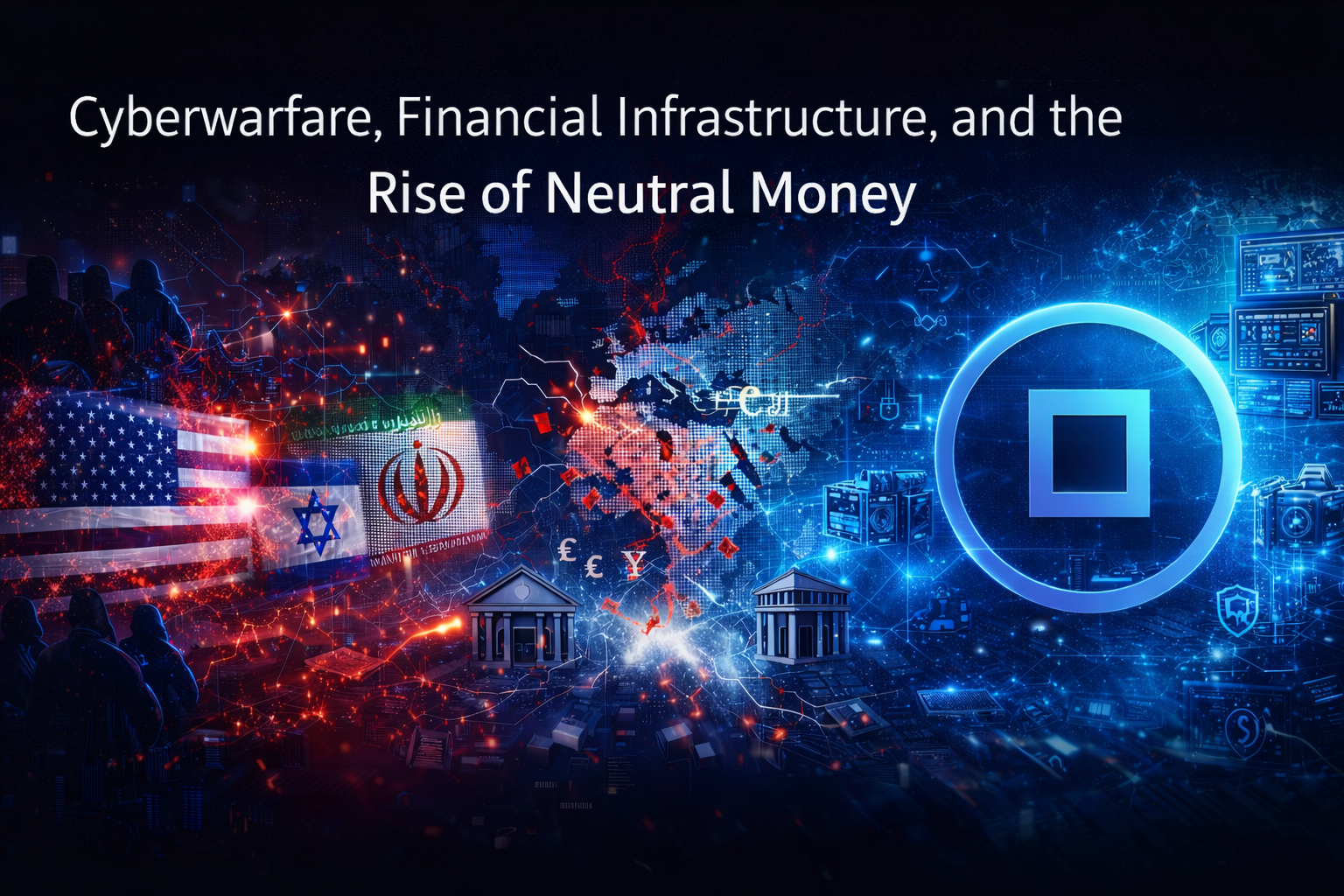
As geopolitical tensions between the United States, Israel, and Iran intensify, analysts increasingly warn that the next phase of conflict may unfold not on conventional battlefields, but in cyberspace. Modern warfare now extends far beyond missiles and drones. Cyber operations targeting financial infrastructure, energy grids, and communication systems have become powerful strategic tools capable of destabilizing entire economies without firing a single shot.
Recent discussions across geopolitical and cybersecurity circles highlight the growing possibility that escalating hostilities in the Middle East could spill into the cyber domain. Financial networks, payment systems, and banking infrastructure represent particularly attractive targets in such scenarios. In a world where nearly all economic activity depends on digital systems, disrupting financial flows can generate systemic instability with global consequences.
The Expanding Battlefield of Cyberwarfare
Cyberwarfare refers to the use of digital attacks by nation states or organized groups to damage, disrupt, or gain control over another country’s computer systems and infrastructure. These attacks may target government institutions, military systems, industrial facilities, energy networks, or financial institutions.
Over the past two decades, cyber operations have increasingly become a standard component of geopolitical conflict. One of the most well-known examples occurred in 2010 with the discovery of Stuxnet, a sophisticated cyber weapon widely believed to have been developed to disrupt Iran’s nuclear enrichment facilities.
Since then, cyber capabilities have evolved dramatically. State actors now deploy ransomware, supply-chain attacks, espionage malware, and infrastructure sabotage tools as part of broader strategic campaigns.
Iran’s State-Backed Cyber Units
Iran has built one of the most active cyberwarfare programs in the world. According to reports from cybersecurity firms and government agencies, several groups linked to Iranian state interests have conducted operations targeting financial institutions, government systems, and private corporations.
Among the most frequently cited groups are:
- APT33 (Elfin) – Associated with attacks against aerospace and energy sectors.
- APT34 (OilRig) – Linked to espionage operations targeting Middle Eastern and Western organizations.
- APT35 (Charming Kitten) – Known for spear-phishing campaigns against journalists, academics, and political figures.
- MuddyWater – A group tied to Iranian intelligence services involved in cyber-espionage campaigns.
The U.S. Cybersecurity and Infrastructure Security Agency (CISA) and multiple intelligence agencies have documented these groups’ activities over the past decade. Their operations typically focus on intelligence gathering, network infiltration, and strategic disruption.
In the context of heightened regional tensions, cybersecurity analysts warn that financial infrastructure could become a high-value target. Payment networks, banks, and trading systems represent key pressure points within the global economy.
The Financial System as a Cyber Target
Modern banking infrastructure relies heavily on interconnected digital systems. Payment clearinghouses, interbank settlement networks, and online banking platforms operate continuously across global networks. While these systems are designed with multiple layers of redundancy, they remain vulnerable to sophisticated cyber attacks.
A large-scale cyber operation targeting financial institutions could potentially disrupt payment processing, freeze banking services, or undermine trust in financial stability. Even temporary outages can trigger cascading economic effects if public confidence erodes.
Cybersecurity experts have repeatedly warned that financial infrastructure represents one of the most strategically sensitive components of national economies. Unlike traditional military targets, cyber attacks against financial systems can propagate globally within minutes.
Are Funds in Traditional Banks Truly Safe?
Many depositors assume that their bank funds are fully protected. In reality, deposit insurance systems only guarantee balances up to specific limits.
In the United States, the Federal Deposit Insurance Corporation (FDIC) protects deposits up to $250,000 per depositor, per bank. In the European Union, national deposit guarantee schemes generally cover up to €100,000. In the United Kingdom, the Financial Services Compensation Scheme protects deposits up to £85,000.
These guarantees are designed to maintain confidence during bank failures, but they do not eliminate systemic risk. Large depositors remain exposed beyond those limits, and deposit insurance funds themselves ultimately rely on government backing. In severe financial crises, the stability of fiat currency systems can become a central concern.
Modern monetary systems operate on continuously expanding money supply. When governments respond to economic stress through aggressive monetary stimulus, currency supply grows exponentially. While such measures may stabilize markets in the short term, they can gradually erode purchasing power over time.
Historically, inflationary cycles often accelerate during periods of geopolitical stress, war, or financial instability. When trust in traditional financial institutions weakens, individuals and businesses begin searching for alternative stores of value.
The Emergence of Neutral Digital Money
Digital currencies have introduced an alternative model of monetary infrastructure — one that operates independently of centralized financial institutions.
Among these systems, privacy-focused networks aim to preserve financial sovereignty while protecting user confidentiality. These networks function without central authorities, allowing transactions to occur directly between participants across decentralized infrastructure.
One example is Ryo Currency, a privacy-focused cryptocurrency designed around decentralization and censorship resistance.
Decentralized Mining and Network Resilience
Unlike many digital assets that rely on specialized mining hardware, Ryo Currency utilizes the CryptoNight-GPU algorithm. This design enables mining using widely available consumer hardware, including modern PCs and gaming GPUs.
The result is a mining ecosystem distributed across thousands of independent participants rather than concentrated within industrial mining facilities. Such decentralization significantly increases the resilience of the network.
Anyone with a capable PC can contribute computing power and help secure the network. Learn more about how to mine Ryo Currency and contribute to network decentralization.
The Future of Privacy Technology
Ryo Currency is also preparing for a significant evolution in privacy technology. The network roadmap includes the adoption of Halo 2 zero-knowledge proofs combined with a high-latency mixnet.
This architecture aims to provide one of the most advanced privacy protocols in the digital asset space. By combining cryptographic transaction privacy with network-level anonymity, the system is designed to protect both transactional metadata and user identity.
At the same time, Ryo maintains a 20-year fair emission schedule and nearly a decade of distributed GPU mining. This long-term distribution model promotes broad ownership while supporting the network’s transition toward a future proof-of-stake security model.
Further details about the network’s long-term cryptographic research and quantum-resistant direction can be found in the following article: Ryo Currency’s Quantum-Resistant Future
Cyberwarfare and the Future of Financial Sovereignty
If geopolitical conflicts increasingly extend into cyberspace, financial infrastructure may become one of the most contested strategic domains. Cyber attacks targeting banks, payment systems, and digital infrastructure could disrupt the traditional financial system in unprecedented ways.
In such an environment, decentralized monetary networks represent an alternative model of resilience. Systems that operate across globally distributed nodes — secured by independent participants rather than centralized institutions — are inherently more resistant to single points of failure.
Privacy-preserving cryptocurrencies also introduce the concept of neutral money: a form of digital value exchange that operates independently of national governments, financial intermediaries, or geopolitical conflicts.
As cyberwarfare capabilities continue to evolve, the resilience of financial infrastructure will remain a critical question. The rise of decentralized networks suggests that the future monetary landscape may increasingly include systems designed to function even when traditional financial systems face disruption.
Conclusion
As global tensions evolve, the role of decentralized financial networks may become increasingly significant. Whether as a hedge against systemic risk, a tool for financial sovereignty, or a foundation for future monetary systems, privacy-focused cryptocurrencies continue to push forward the boundaries of what digital money can achieve.